Case study · Web Applications
University of Lincoln Business Centre
Replacing a complex legacy system with software designed around the people using it.
We've worked with the University of Lincoln since 2014.
One of our largest projects together has been the creation of a bespoke management platform for its business incubation centres, including Sparkhouse and Think Tank.
Launched in 2023, the application replaced a legacy software system that had become increasingly difficult and inefficient for the teams relying on it every day.
Rather than recreating that same system in newer technology, we started with a more useful question:
How can this work better?
Working together since
2014
Platform
Laravel
Project launched
2023
Work
CRM · Bookings · Invoicing · Reporting
The challenge
Understanding the day-to-day work
Managing a business centre involves much more than maintaining a list of tenants.
There are prospects and enquiries, office spaces, virtual tenancy packages, meeting-room bookings, contracts, rent, service charges, invoicing, keys, fobs, parking permits and reporting requirements.
The previous system had accumulated complicated processes and workarounds over many years. Some everyday tasks involved numerous steps and information was difficult to find or reconcile.
Our objective was to make those processes feel considerably simpler without losing the detail the University needed behind them.
Central platform
One system across multiple centres
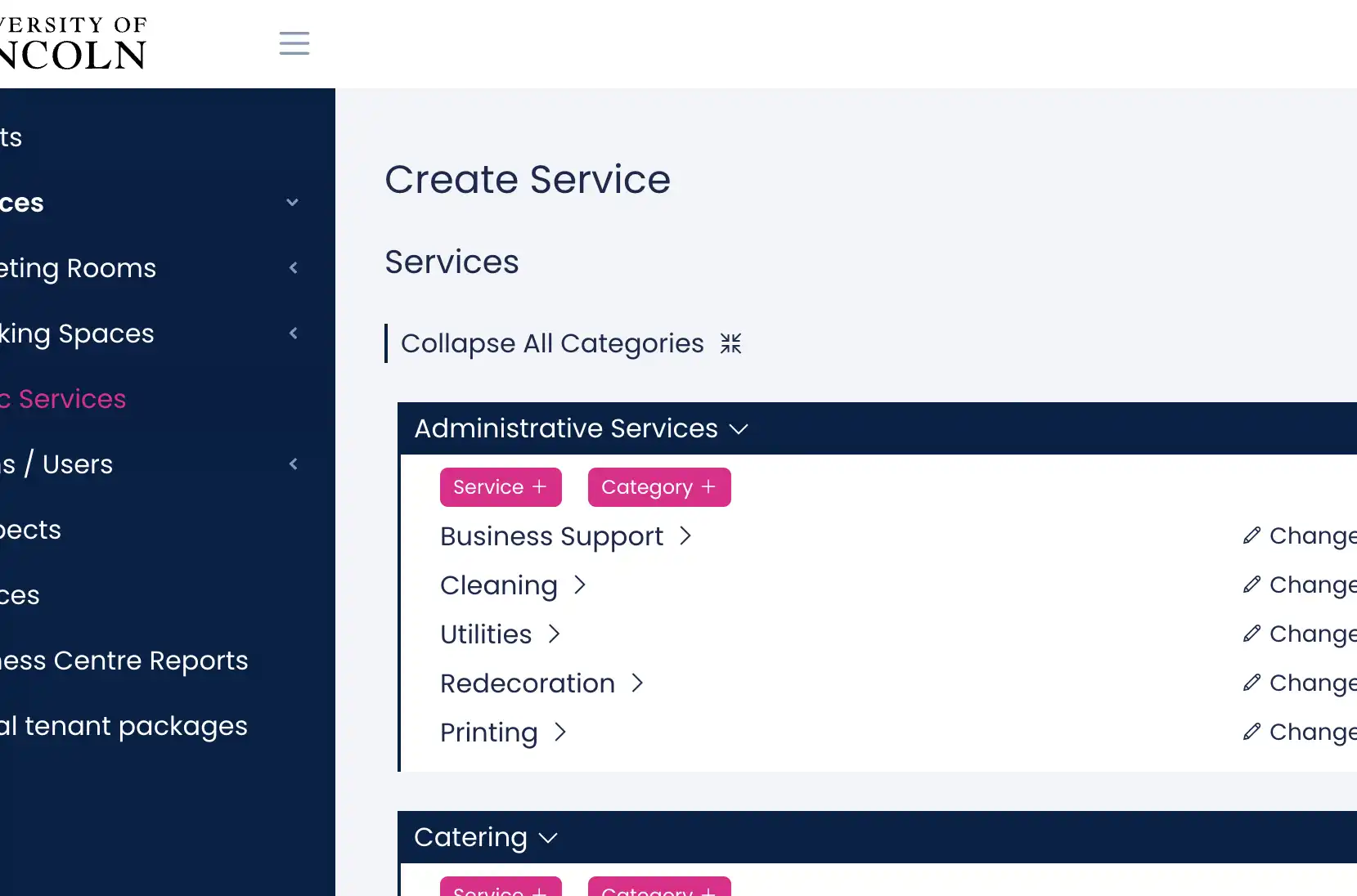
We created a central application through which the team can manage different business centres while retaining the context and data relevant to each location.
Staff can follow organisations from initial enquiry through to becoming tenants, manage associated contacts and assets, handle office arrangements and maintain a clear record of the relationship.
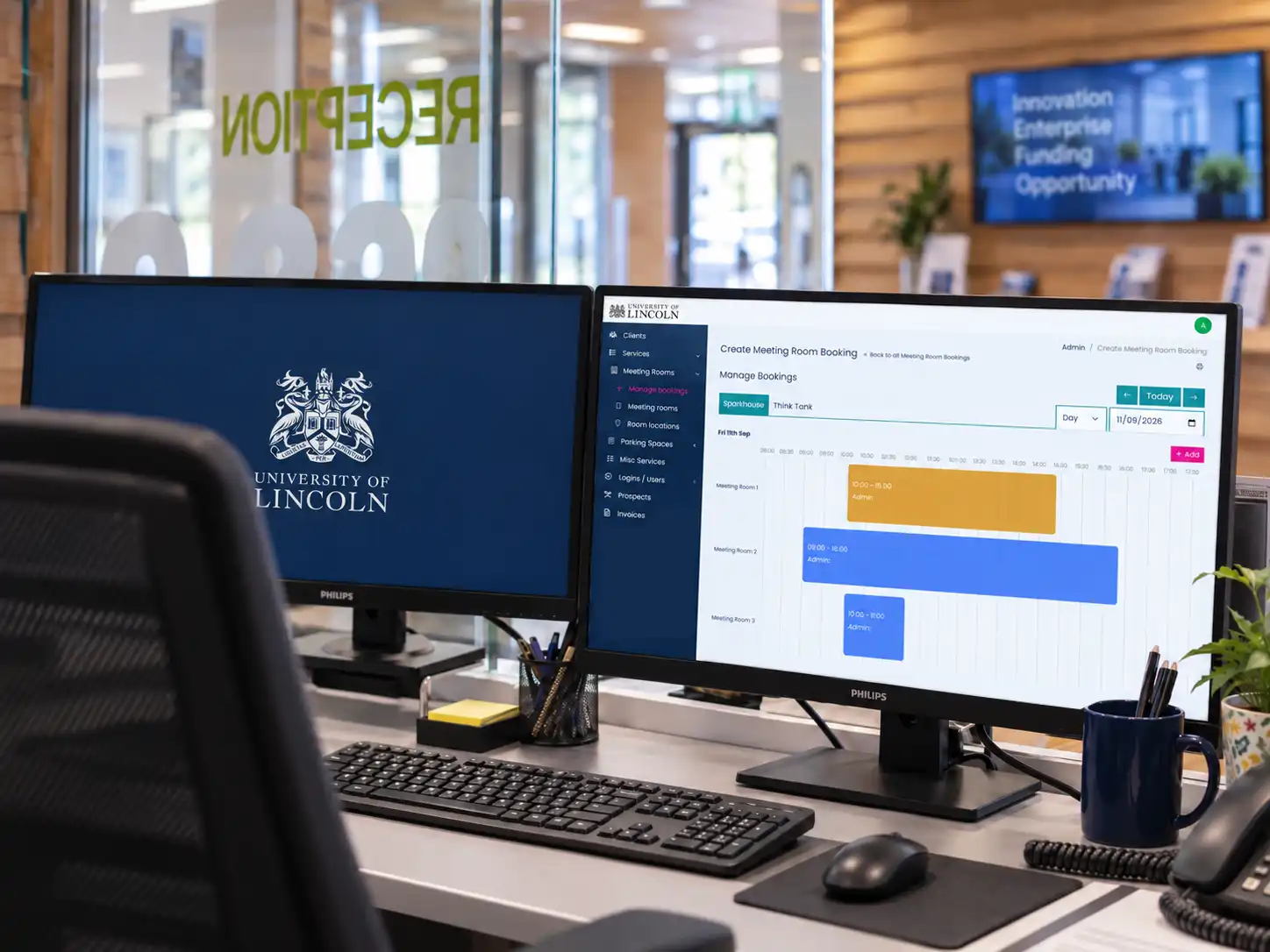
Meeting-room bookings are managed within the same platform, including provisional and confirmed reservations, availability checking and safeguards against double booking.
The result is less jumping between systems and a clearer picture of what is happening across the centres.
Invoicing & reporting
Making complicated billing manageable
Billing was one of the more complex areas.
Commercial property rarely fits into perfectly neat monthly transactions. Tenants move during billing periods. Different services need itemising. Rental arrangements vary. Finance teams need data in specific formats.
We developed invoicing and reporting tools around those realities, including partial-period calculations, service breakdowns and exports for reconciliation with wider University finance processes.
The underlying rules can be complicated. The interface shouldn't feel that way.
System flow
Tenancy, services and bookings feeding invoicing and finance exports
- 01 Tenancy / services / bookings
- 02 Invoicing
- 03 Finance exports
Continual improvement
Watching people use what we built
The application didn't stop evolving when it launched.
We've continued working directly with the people using it, including spending time on site watching how staff complete everyday tasks and discussing where the system could be improved.
That has led to changes large and small: improvements to prospect management, handling unsuccessful enquiries, adjustments to invoice presentation, new billing arrangements and many refinements that would have been difficult to identify from a specification document alone.
This is often where bespoke software earns its value.
You can build around how an organisation really works, and keep adapting it when that work changes.
Bespoke software
An application that belongs to the University
There is no monthly SaaS product determining what the University can or cannot change.
The software has been designed specifically for its processes and can continue evolving around them.
For organisations with distinctive requirements, that freedom can be far more valuable than trying to make an off-the-shelf platform almost fit.
From our side
The part we like most about bespoke software is watching somebody use it and realising there is a better way to do something.
With this project we've been able to keep doing that after launch, sitting with the team, seeing how they actually work and making the system better around them.
Back to all work