Case study · Shopify & Ecommerce
Blakely Clothing
Supporting a fast-moving fashion brand on Shopify.
We've worked with Blakely since 2022, providing ongoing Shopify development across the storefront, backend and wider app ecosystem.
Fashion ecommerce moves quickly.
Collections change. Campaigns arrive. New markets open. Customer expectations evolve. And something that worked well twelve months ago can already need improvement.
Our relationship with Blakely is therefore much less about a website being built and much more about continually helping the ecommerce experience keep pace with the brand.
Working together since
2022
Platform
Shopify Plus
Relationship
Monthly ongoing development & support
Work
Frontend · UX · Apps · International ecommerce

Ongoing development
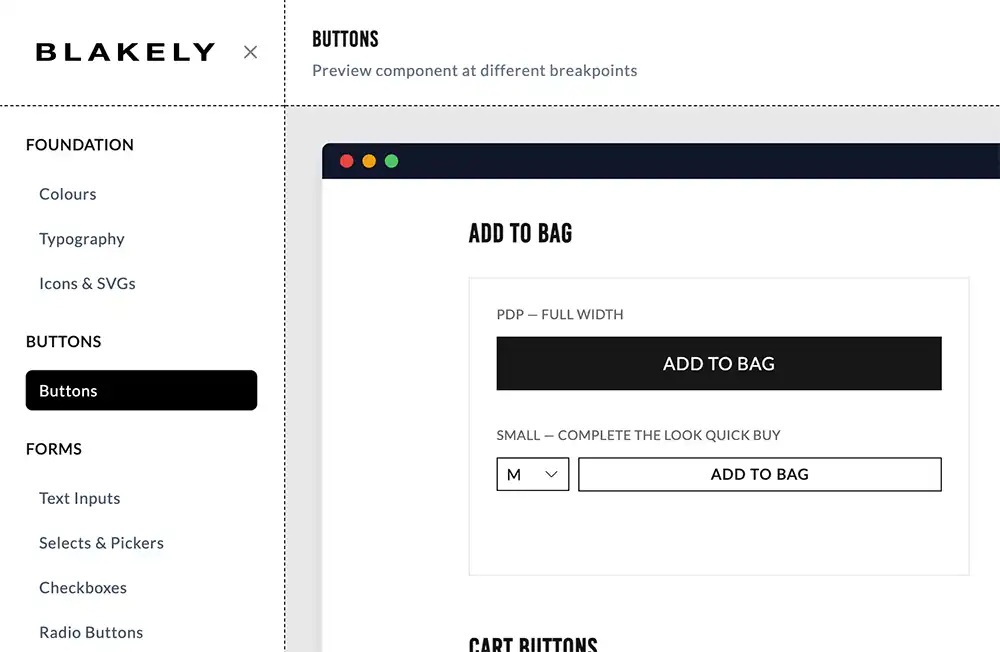
Continual frontend and UX development
The storefront is regularly refined rather than periodically replaced.
We work across frontend development, UX, styling and functionality, supporting Blakely's internal team as new requirements and opportunities emerge.
That includes maintaining and developing its frontend style system, implementing new creative and layouts, refining customer journeys and regularly reviewing site performance.
Performance on a modern Shopify store is a balance. Some things sit firmly within the theme and frontend code we control; others come from the third-party apps and services the business needs to operate.
Our job is to keep looking at both sides of that equation, improving what we can control and helping make sensible decisions about everything else.
International ecommerce
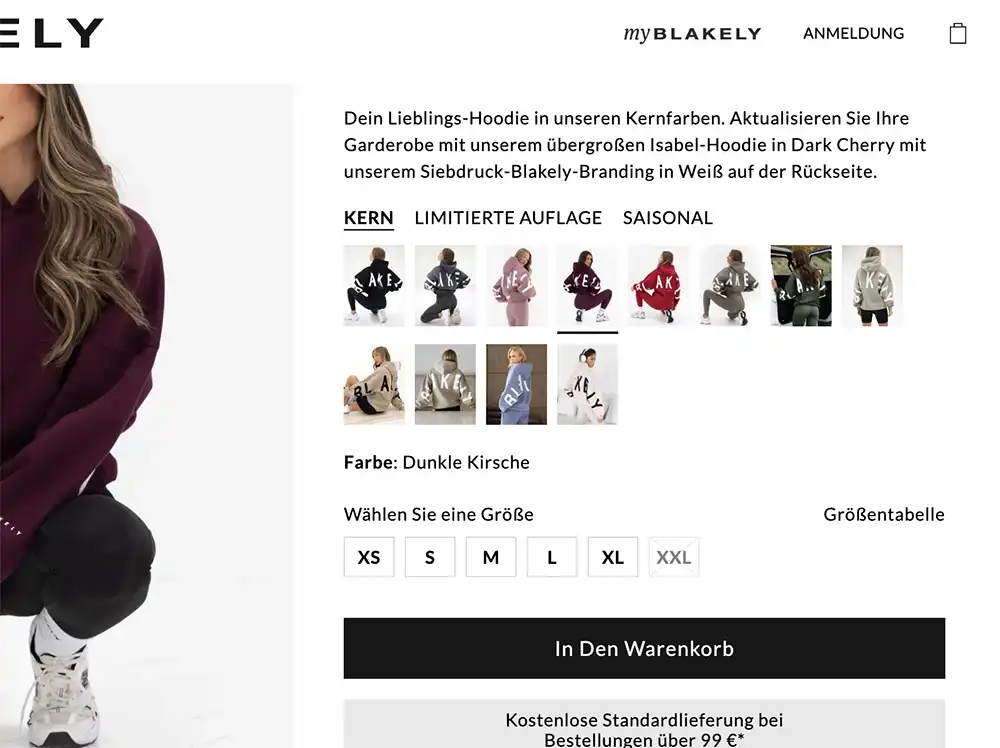
Shopify across different markets
Blakely trades internationally through multiple stores and markets.
We've worked across that setup as it's evolved, including Shopify Markets and multilingual requirements within Europe alongside separate stores for other territories.
International ecommerce quickly introduces complexity around content, language, configuration and the differences between markets.
The customer shouldn't have to see that complexity.
Custom integration
Taking APEX beyond a standard ticketing app
Blakely's APEX Games have become an important extension of the brand, bringing its community together through physical fitness events.
Ticketing presented an interesting ecommerce challenge.
An entirely off-the-shelf ticketing experience would have meant surrendering much of the frontend experience to a third-party interface.
Instead, we developed a custom integration between Shopify and the ticketing platform, allowing Blakely to retain much greater control of how the buying journey looks and feels while still using the specialist system behind it.
The technology does its job without the customer feeling like they've suddenly left Blakely.
Behind the storefront
Working behind the storefront
Not everything we develop is visible.
Over the course of the relationship we've built smaller private tools and API processes where required, including functionality for writing additional customer information and bulk data migrations or transformations.
These aren't applications created for the sake of creating applications.
They're usually there because a manual process needs removing, Shopify needs information handled differently, or the internal team needs something the standard platform doesn't provide.
System flow
Private tools and APIs where Shopify needs information handled differently
- 01 Shopify / storefront
- 02 Private tool or API
- 03 Customer or catalogue data
Ongoing support
An ongoing relationship
The advantage of a monthly development relationship isn't simply having somebody available when something breaks.
It's the accumulation of context.
We understand more about how Blakely works, its Shopify setup, its international stores and the decisions behind previous development. That means new requirements don't begin from zero every time.
And because the relationship is continuous, improvements don't have to wait for the next redesign.
From our side
Blakely moves quickly, and that's one of the things we enjoy about the relationship. There is always something new to improve, test or solve, and having an ongoing role means we can do that with context rather than starting from scratch each time.
Their growth comes from the team building the brand. We're one of the teams contributing to that, helping the ecommerce experience keep moving with them.